.GED 파일 확장자
GEDCOM Genealogy Data File
| 개발사 | The LDS Church |
| 인기도 |
3.2 | 75 투표 |
GED 파일이란 무엇인가요?
A GED file is a data file saved in the GEnealogical Data COMmunications (GEDCOM) format that contains records of family history and genealogical events, along with metadata linking the records. It often includes information about births, deaths, marriages, parent-child relationships, and other family connections.
추가 정보
The GEDCOM format was developed by The Church of Jesus Christ of Latter-day Saints (The LDS Church) in the 1980s to provide a standard way for genealogical researchers to save and exchange family data. Since its initial release, the format has undergone several revisions, with version 5.5.1 (released in 1999) being the most widely used. In 2021, FamilySearch released GEDCOM 7.0, adding support for new data structures and features.
GED files may be used by both casual and professional genealogists. Casual users often document their own family history, while professional researchers may use the format to manage larger genealogical databases for academic or archival purposes.
참고: GED files may also be saved with the .GEDCOM extension.
GED 파일을 여는 방법
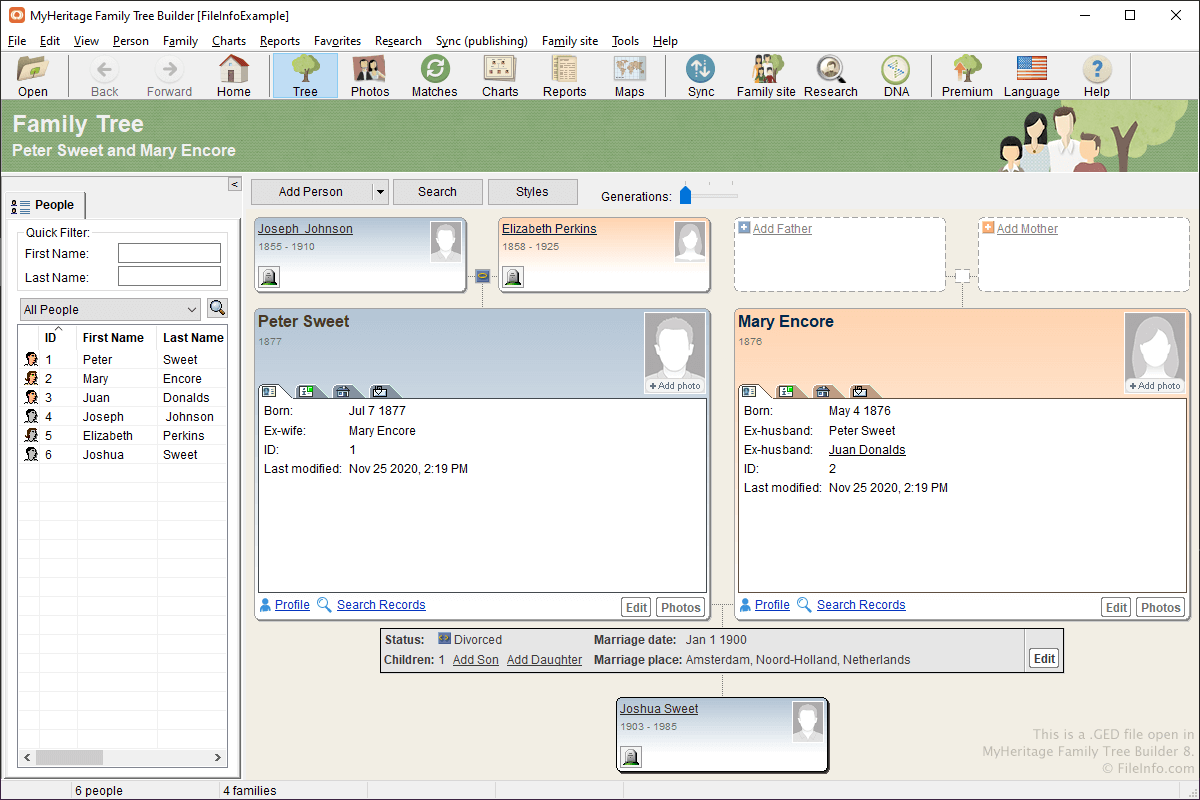
You can open GED files with various genealogy applications, including RootsMagic, MyHeritage Family Tree Builder, and GeneWeb. You can also upload GEDCOM files to the Ancestry.com and FamilySearch.org websites.
Since GED files are saved in a text format, you can open them with a plain text editor, such as Microsoft Notepad or Apple TextEdit, and edit them. Keep in mind that opening GED files with a text editor will not display the information in the same structure as if they were displayed in a genealogical application.
GED 파일을 여는 프로그램
Game Editor Project File
| 개발사 | Game Editor |
| 인기도 |
3.1 | 15 투표 |
Game development project created with Game Editor, a cross-platform game creation program; includes game data and settings; saved along with a game folder that contains the game resources.
추가 정보
Game Editor can be used to develop games for Windows 95, 98, Me, NT, 2000, 2003, XP, and Vista, as well as Pocket PC, Linux, and Windows Mobile-based operating systems.